
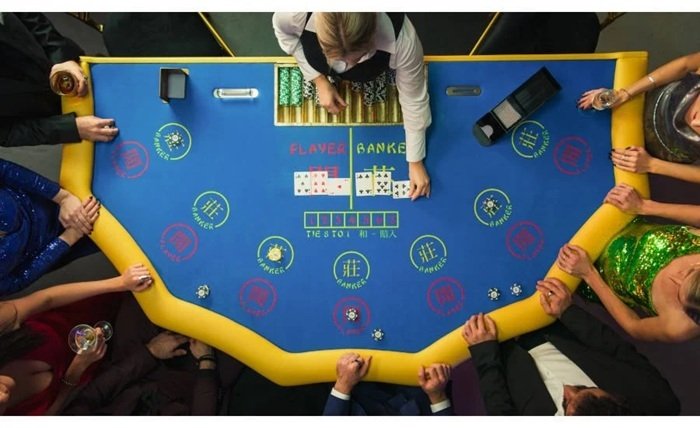
Choosing a baccarat table is not only a matter of comfort; it determines how many hands you can afford, how intense the swings feel, and how much control you keep over your decision-making as a session unfolds. When you match table limits, game speed, and table features to your bankroll and temperament, you create a structure that reduces the likelihood of emotional betting and gives your strategy room to operate.
Why Table Selection Matters More Than Most Players Assume
Many baccarat players focus on bet choices while ignoring table structure, yet table limits and pace drive how quickly your bankroll is exposed to variance. If your minimum bet is too large relative to your budget, a short losing streak can wipe out your session in a handful of hands, even though the house edge in baccarat is relatively low. When you deliberately choose tables that align with your financial and emotional thresholds, you slow down potential losses, give yourself more decision points, and make it easier to walk away at planned win or loss limits instead of reacting to short-term streaks.
Translating Your Bankroll Into Practical Table Limits
A logical way to connect budget to table choice is to define a betting unit first, then search for tables where the minimum fits within that unit. Guides on baccarat bankroll management commonly suggest that a single wager should be a small slice of the total bankroll—often around 2–5% per hand—and that only a fraction of your overall funds should be risked in one session. This means a player with 500 units of currency who sets a betting unit of 5–10 units should avoid tables where the minimum is 25 or 50 units, because those limits concentrate risk into too few decisions and make rational adjustment during swings much harder.
Table Type, Game Speed, and Their Impact on Your Budget
Beyond limits, the type of baccarat table and its inherent speed reshapes how your budget behaves over time. Mini-baccarat and fast variants can run hundreds of hands per hour, multiplying both winning and losing streaks in a single session, whereas larger, slower tables reduce the number of decisions and thus the total exposure to the house edge over the same period. For a modest bankroll, fast low-limit tables may appear attractive, but the high hand volume means that even a small edge against you will materialize more quickly, while slower formats give you more time to think and to apply any pre-set stop-loss or stop-win boundaries before fatigue sets in.
Conditional Scenarios: Matching Table Types to Player Profiles
Different player profiles experience the same table very differently, so it helps to consider concrete scenarios when choosing a room. A conservative player with a limited budget and a preference for calm decisions usually benefits from lower limits and slower tables, where each hand uses a small percentage of the session bankroll and there is time to track results; in contrast, an action-oriented player with a higher budget might prefer higher limits or speed variants, but still needs clear loss limits to avoid the cumulative impact of rapid rounds and emotional responses to streaks. Understanding how you react to quick swings, dealer pace, and table crowding allows you to select environments where the structure cushions your tendencies rather than amplifying them.
Comparing Table Choices by Budget and Style
When you compare tables, it helps to frame the decision in terms of how many hands you can likely play, what emotions are triggered by speed, and how tightly you want to control session length. The following table contrasts typical choices for different bankroll sizes and styles, illustrating how limits and pace combine to change the experience even when odds remain similar.
| Profile | Bankroll (example) | Recommended Min Bet Range | Table Type / Pace | Expected Impact on Session |
| Cautious beginner | 200 units | 2–5 units per hand. | Low-limit, standard-speed tables. | Longer sessions, slower swings, easier adherence to limits. |
| Recreational social player | 300–500 units | 5–10 units per hand. | Standard mini-baccarat, moderate pace. | Balanced excitement with manageable risk per hand. |
| Aggressive experienced player | 800+ units | 10–20 units per hand. | Higher-limit or faster variants. | Higher volatility, strong need for strict stop-loss rules. |
This comparison shows that the “right” table is not universally low- or high-limit, but the one where the minimum bet and pace produce a reasonable number of hands before hitting your predefined loss threshold, giving you enough data to evaluate your play without pushing you into impulsive decisions. Players who skip this mapping often end up at tables where a few emotionally charged bets decide the entire session, making it difficult to distinguish bad luck from poor structure.
Psychological Triggers: How Room Dynamics Influence Your Choices
Room dynamics—crowding, visible streaks on scoreboards, and dealer tempo—interact with your own psychology to either support or undermine discipline. Research on baccarat behavior highlights that long banker or player streaks are common, and that these patterns often tempt players to double stakes or chase reversals, even though the underlying odds do not change from hand to hand. If you already know that long streaks raise your heart rate and push you toward larger bets, choosing quieter rooms, tables with less prominent streak displays, or environments where you can pause between hands can reduce the intensity of those impulses and keep decisions closer to your original budget plan.
Using Room Diversity on UFABET to Test Fit
When someone wants to understand which baccarat environment suits their budget and temperament, having access to multiple live rooms in one place makes structured testing more realistic. Under conditions where a player rotates between different betting limits, dealer paces, and table layouts while keeping the same bankroll rules, a multi-room sports betting service such as member ufa747 becomes a practical testbed: by observing how often stop-loss limits are hit, how quickly fatigue appears, and how strongly streaks influence bet sizing in each room, the player can identify which combinations of limit, speed, and table presentation support stable behavior and which combinations lead to rushed decisions or overexposure.
Recognizing When Table Choice Stops Working for You
Even a carefully chosen table can become unsuitable once emotions override the assumptions that guided your original selection. Signs that the room no longer matches your current state include repeatedly raising stakes beyond the planned unit size, shortening breaks between hands, or ignoring previously set win or loss targets as soon as streaks appear. When these patterns emerge, the constructive response is not to search for a “hotter” table but to step away entirely, since changing rooms without changing mindset typically preserves the same risky behavior while adding fresh variance.
Educational Perspective: Learning From casino online Room Structures
From an educational angle, each baccarat room can be treated as a small laboratory where you test how different constraints shape your decisions. When a player deliberately tracks sessions across several environments in a casino online interface—varying only one factor at a time, such as minimum bet, speed, or visible streak displays—they start to see patterns in how budget depletion, emotional spikes, and strategy adherence depend less on “luck” and more on structural choices; by recording how many hands are played before hitting predetermined profit or loss boundaries at each room, a learner can refine both their bankroll rules and their selection criteria, gradually favoring environments that keep decisions calm and data-driven instead of reactive.
Summary
Choosing a baccarat table that fits your budget and style is fundamentally about converting abstract bankroll rules into concrete decisions about limits, pace, and room dynamics. Tables where the minimum bet is a small, stable fraction of your session bankroll, combined with a speed and display style you can handle without emotional betting, extend playtime and make it easier to respect stop-loss and stop-win boundaries. By treating each room—online or live—as a structured environment and adjusting only when the numbers and your own reactions justify it, you turn table selection from an afterthought into a core part of disciplined baccarat play.