
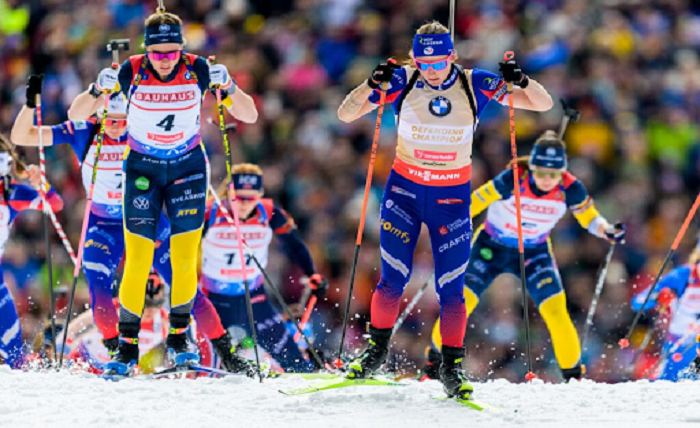
In relay events governed by the International Biathlon Union, the order of athletes across 4 legs of 7.5 km each is not a simple lineup choice, it is a strategic structure that unfolds over approximately 1 hour and includes 8 shooting stages per team. Each leg includes 2 shootings with 5 targets each, and up to 3 spare rounds, meaning a total of 40 primary shots and potential 24 spare rounds across the relay. That creates layered pressure. And sequencing matters. When early starters gain tactical advantage on the track, opening the platform via 1xBet login page makes live betting sections instantly available.
Teams like Norway, often anchored by Johannes Thingnes Bø on the final leg, structure their order so that earlier athletes maintain time gaps within 10–20 seconds, allowing the anchor to attack with clean shooting above 90% accuracy. In a relay with 20–25 teams, small differences accumulate, where a single penalty loop of 150 meters can cost 20–25 seconds. If that happens on leg 1 instead of leg 4, the recovery dynamics change completely. And positioning shifts. As timing gaps between athletes shape race dynamics, logging in through login page 1xBet provides access to constantly updated coefficients.
Why athlete order changes race dynamics
Placing a consistent shooter in the first leg reduces early volatility, while assigning the fastest skier to the final leg allows for aggressive closing strategies over the last 2.5–3 km lap. In total race distances of 4×7.5 km, even a 5-second loss per leg becomes a 20-second deficit at the finish. That is often the difference between 1st and 5th place. And it originates from order.
The key structural factors are the following:
- 4 legs of 7.5 km each
- Total race time around 60 minutes
- 8 shooting stages per team
- 40 primary shots plus spare rounds
- Penalty loops of 150 meters costing 20–25 seconds
- Fields of 20–25 teams
This means strategy is not only about individual performance but about sequencing athletes to control risk and maximize strengths at specific race phases. Over the full relay, gaps compress and expand based on who skis when. And that defines outcomes. The result is a discipline where coaches build lineups not by ranking athletes from strongest to weakest, but by aligning skill sets with race phases, balancing shooting reliability and skiing speed across all 4 legs. This creates multiple viable strategies. Every leg matters equally. And the order decides everything.