
Buying equipment is only half the battle. A wall printer can sit in your garage for weeks if no one knows that you offer UV printing services. The biggest challenge for people entering this market is not learning how to use the equipment, but building a steady stream of orders that will turn your investment into predictable income. This guide shows you proven ways to acquire customers and grow your business step by step.
Your first project, the most important job in your entire career
Before you start looking for paying customers, you need one thing: proof that you can do it. Your first job usually doesn’t make a profit, but it brings something more valuable: photos for your portfolio, material for social media, and a reference from a satisfied customer.
The fastest way to get your first project is to offer UV printing to someone in your immediate environment. A friend who runs a restaurant, family renovating their flat, a local company looking to refresh their office. All it takes is one wall done carefully and documented with photos to start the whole process of getting more orders.
The key rule: document everything from the very beginning. Before and after photos, a short video of the printing process, customer feedback. These materials will work to build your recognition for months.
Wall printer and social media as a growth engine
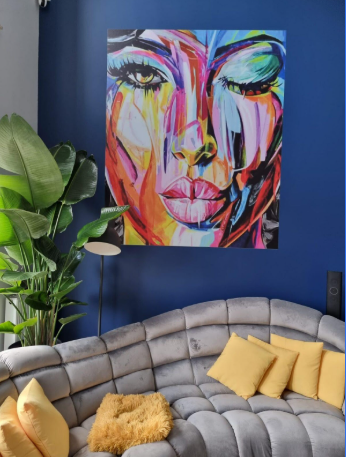
UV printing is a service that sells itself through the eyes. The visual effect is so spectacular that a well-photographed project attracts attention organically, without spending money on advertising. This is a huge advantage over most renovation services, where it is difficult to find material that stops people from scrolling.
A social media profile should serve as a living portfolio. Each project is a separate post with photos of the final result, a short description of the project and a location tag. Time-lapse videos of the printing process generate engagement because people like to watch an empty piece of wall turn into a large-format graphic.
Regularity of publication is more important than the production of polished materials. Authentic reports from the construction site, photos taken with a phone right after printing, and short comments from customers build credibility more effectively than professional photo shoots.
Local visibility and the power of recommendations
Most first orders for wall printing do not come from advertisements or search engines. They come from people who have seen the effect live and asked who did it. One well-done wall in a restaurant generates questions from guests, owners of neighbouring premises and friends of the owner. This chain of recommendations starts on its own, provided that the work is impressive and signed with your contact details.
Wall printing is such a niche service that there is a shortage of contractors in most regions. Whoever appears first with a good portfolio will get the orders before the competition has a chance to get started.
Cooperation with architects and interior designers
Architects and interior designers are one of the most valuable channels for acquiring orders. They work with clients who have a budget for non-standard solutions and expect results that go beyond catalogue wallpapers and paints. A single partnership with an active design office can provide regular orders for months.
Your approach to this cooperation should be specific. Prepare a short presentation of your projects, show the technical capabilities of your equipment and offer to carry out one project on preferential terms. An architect who sees the effect live and experiences the smoothness of the process will naturally start recommending your services to their clients.
A similar logic applies to renovation companies, developers and commercial property managers. Each of these groups regularly carries out projects in which UV printing on walls adds value for their own clients.
How to price services and build profitability
Pricing wall printing services is a topic that can keep you awake at night when you first start out. Too low a price attracts customers but eats into your margin. Too high a price deters customers and lengthens the waiting time for orders.
Below are some elements to consider when building your pricing model.
- Cost of consumables. UV ink and print head wear are the basic costs of each project. This is a value that should never be undercut.
- Lead time. Travel to the site, installation of the equipment, the print itself and any corrections. Every hour of work has its value and should be reflected in the final price.
- Graphic design. If the customer does not provide a ready-made file, graphic processing or the purchase of an image licence is an additional service for which it is worth charging a separate rate.
- Complexity of the substrate. Printing on a smooth wall is faster than on a brick wall. Differentiating the price list according to the type of surface protects the margin on more difficult projects.
- Perceived value. The customer does not pay for the ink on the wall. They pay for a unique decoration that cannot be bought in any shop. The price should reflect this value, not just the cost of materials.
- Service packages. An offer that includes graphic design, printing and photographic documentation as a complete package simplifies the purchasing decision and increases the average order value.
Building a base of regular customers
One-off orders keep the business going, but regular customers build its stability. Catering establishments that change their decor seasonally, retail chains that update their visual campaigns, and hotels that refresh their rooms on a rotating basis are entities that need UV printing on a regular basis. Establishing relationships with several such customers creates a financial foundation on which you can confidently develop other sales channels.
After-sales service is crucial here. Contacting customers after completion to ask about their satisfaction, reminding them about the possibility of updating graphics after the season, and offering a loyalty discount on their next order are actions that take minutes but pay off for years.
Wall printers⁺ also supports its customers at this stage by sharing its knowledge about building business relationships and strategies for developing a wall printing business. This support goes far beyond the sale of equipment alone.
Wall printer and business scaling
When your order calendar is full for several weeks ahead, it’s a sign that it’s time to think about scaling up. Increasing your geographical reach, hiring an operator, expanding your offer to include printing on unusual substrates, or entering the corporate segment are natural directions for growth.
Each of these steps requires a well-thought-out decision, but they are all based on the same foundation: a solid portfolio, a base of satisfied customers, and well-developed operational processes. An entrepreneur who builds these elements in the first months of operation has a clear path to building a company that generates revenue on a completely different level.
Summary
Acquiring customers for wall printing is a process that starts with one good project and develops as recognition grows. Social media, recommendations, partnerships with architects and consistent after-sales service create a system that, over time, generates orders almost automatically. A wall printer is a tool with enormous earning potential, but this potential is only unleashed when the equipment is backed by a well-thought-out strategy for acquiring and retaining customers. The best time to build this strategy is at the very beginning of your business. Those who start now will have a full order book and a customer base that their competitors can only envy in six months’ time.