
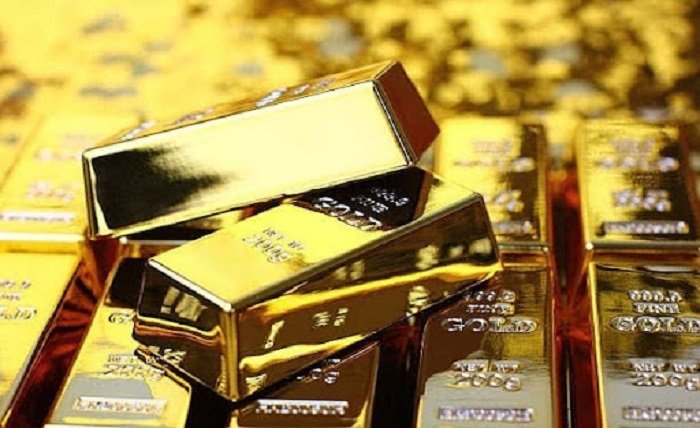
Let’s talk about something that’s been a symbol of wealth, security, and tradition across cultures for centuries: gold. But not just any gold—specifically, the weight and measure known as the tola, and even more specifically, the price of 50 tola of gold. It’s a fascinating lens through which to view history, economics, and human behavior. The journey of the 50 tola gold price isn’t just a dry chart of numbers, it’s a story of empires, personal fortunes, global crises, and timeless allure. For many in South Asia and beyond, tracking the 50 tola gold price is more than a financial exercise—it’s a connection to heritage and a practical gauge of the world’s economic heartbeat. So, pull up a chair. We’re going to wander through time, from bustling ancient bazaars to the digital dashboards of modern trading platforms, to see how this particular measure of treasure has ebbed and flowed.
The Ancient Roots and the Tola Measure
To understand the 50 tola gold price, we first have to understand the tola itself. This isn’t a modern gram or ounce, it’s a unit of mass with deep historical roots, traditionally used in India and surrounding regions. One tola is roughly 11.66 grams. So, 50 tola is a substantial amount—about 583 grams or just over 1.28 pounds of pure gold. In ancient times, gold wasn’t traded with daily fluctuating prices on a screen. Its value was intrinsic, tied to its weight, purity, and the authority of the ruler whose mark it bore. Kings and emperors hoarded it, traded it for spices and silks, and used it to fund wars and build monuments. The concept of a “market price” for 50 tola of gold was fluid, often determined by a merchant’s scales in a caravan serai or a jeweler’s shop in a crowded market lane. Its value was absolute in one sense—it was gold, after all—but relative in another, swayed by local scarcity, political stability, and the sheer demand for a metal that everyone agreed was precious. Even then, a transaction involving 50 tola represented significant wealth, perhaps a dowry, a merchant’s capital reserve, or a temple’s offering.
Colonial Eras and the Introduction of Formal Markets
Fast forward to the colonial period, particularly under the British Raj in India. This era began to formalize and globalize the trade in gold. The British Empire, with its vast economic machinery, started to integrate local systems into a global framework. The tola, however, persisted. While London set gold prices in pounds sterling per ounce, in the bazaars of Mumbai, Kolkata, and Karachi, people still thought—and traded—in tolas. The 50 tola gold price began to feel the tug of international forces. Events like the discovery of gold in California or South Africa, or the financial policies set in London, would eventually ripple out to affect what a family would pay for 50 tola in Lahore or Dhaka. This period created a dual reality: a world price for gold and a local price for 50 tola, with the gap between them telling a story of transport costs, colonial taxes, and local demand. It was during these times that gold solidified its role not just as ornamentation, but as a hedge against uncertainty—a portable, private bank for millions.
Post-War Stability and the Bretton Woods System
The end of World War II brought a new world order, and with it, a new framework for gold: the Bretton Woods system. From 1944 until 1971, the US dollar was pegged to gold, and other currencies were pegged to the dollar. This created an unusual period of stability in the official gold price. For a couple of decades, the international price of gold was fixed at $35 per ounce. This meant the 50 tola gold price, when converted, had a kind of official anchor. Of course, black markets and local premiums still existed, especially in nations with currency controls or high import duties on gold. But globally, the price was held artificially steady. For families saving in gold, this was a predictable era. They could estimate the value of their 50 tola holdings with relative certainty, at least in dollar terms. This stability, however, was a calm before a monumental storm. It masked growing economic pressures that would soon unleash gold—and the 50 tola gold price—into the wild seas of a free market.
The Nixon Shock and the Free Market Frenzy
Everything changed in 1971 when President Richard Nixon severed the US dollar’s direct convertibility to gold. This “Nixon Shock” effectively ended the Bretton Woods system and set gold free. The price was no longer anchored by governments, it was to be determined by the open market. What followed was a rollercoaster. The 1970s saw oil crises, high inflation, and geopolitical turmoil, all of which sent investors flocking to gold as a safe haven. The price skyrocketed. For the first time, the 50 tola gold price became truly volatile, reacting in real-time to news headlines, inflation reports, and political unrest. A family’s 50 tola savings could see its dollar or rupee value swing dramatically from one year to the next. This period cemented gold’s modern identity: it was now a highly liquid financial asset as much as a cultural commodity. The drama of the free market had arrived at the doorstep of every gold buyer and seller.
The Digital Age and Real-Time Tracking
The late 20th and early 21st centuries brought the most profound shift yet: the internet. Before, finding the 50 tola gold price might require a phone call to a trusted jeweler or a glance at the financial newspaper. Now, it’s at everyone’s fingertips. Websites and apps provide live, global spot prices, with calculators that instantly convert ounces or grams into tolas and local currencies like the Indian Rupee (INR). This transparency has democratized information but also increased market sensitivity. A political tweet, a change in US interest rates, or a crisis in Europe can now cause the global gold price—and thus the calculated 50 tola gold price—to jump or fall within minutes. Platforms have become essential tools for anyone tracking this metric, from a bride’s family planning jewelry to an investor rebalancing their portfolio. The digital age has woven the ancient measure of the tola into the fabric of global high-frequency finance.
Major Market Crises and the Safe-Haven Surge
To see the 50 tola gold price in action, look no further than major market crises. The 2008 Global Financial Crisis is a prime example. As banks failed and stock markets cratered, fear drove investors toward the ultimate asset of perceived safety: gold. Its price soared over the following years. For someone holding or buying 50 tola, the value of that physical asset ballooned, providing a crucial financial cushion when other assets were failing. The same pattern repeated during the early stages of the COVID-19 pandemic in 2020. Initial market panic and massive economic uncertainty triggered another flight to safety, pushing gold to new nominal highs. Each of these events is a stark reminder of why people have clung to gold for millennia. In a world of digital digits and complex derivatives, the tangible weight of 50 tola represents an undeniable, panic-proof store of value. The fluctuations during these times aren’t just numbers, they are a barometer of global fear and confidence.
Cultural Demand and Seasonal Fluctuations
Beyond global crises, the 50 tola gold price dances to a more predictable, cultural rhythm. In many societies, gold buying is seasonal and event-driven. In India, the wedding season and festivals like Diwali and Akshaya Tritiya see massive spikes in physical gold demand. Millions of families enter the market to buy jewelry, coins, or bars, often thinking in terms of tolas. This surge in local demand can create a premium over the international spot price. So, even if the global market is quiet, the local 50 tola gold price in rupees might climb simply because it’s an auspicious time to buy. This creates a fascinating layer of micro-fluctuations on top of the macro trends. It’s a beautiful example of how ancient traditions directly impact modern market dynamics. The price isn’t just about hedge funds and central banks, it’s about mothers buying gifts for their daughters and farmers investing their harvest earnings.
The Future: Cryptos, Inflation, and Enduring Value
So, what’s next for the 50 tola gold price? The landscape is evolving with new players. Cryptocurrencies, dubbed “digital gold” by some, present a novel alternative store of value. They create volatility and compete for investment dollars. Yet, for every tech enthusiast touting Bitcoin, there remains a deep, centuries-old trust in the physical, inert metal you can hold. Furthermore, in an era of potential sustained inflation, gold’s historical role as an inflation hedge comes back into sharp focus. Central banks themselves, notably in China, Russia, and India, have been net buyers of gold, adding to their reserves—a powerful endorsement of its lasting value. The journey of the 50 tola gold price will continue to be shaped by this tension between the new and the ancient, between digital abstraction and tangible reality.
Wrapping this historical tour up, it’s clear that the narrative of the 50 tola gold price is far more than a financial data set. It’s a continuous thread running through human history, connecting the treasury of a Mughal emperor to the online portfolio of a modern investor, and the dowry chest in a village home to the vaults of the New York Federal Reserve. Its fluctuations tell the story of our world: our fears, our celebrations, our economies, and our enduring belief in something solid. Whether you check it on a sleek website or hear it quoted in a bustling jewelry mart, that number for 50 tola of gold is a tiny, brilliant reflection of everything that has been and everything that might come. And that’s a story that’s anything but set in stone—it’s as dynamic and alive as the markets themselves.
Bitget provides large-unit pricing through 50 tola gold price, offering INR value using updated gold benchmarks.